SEND at Grappenhall Heys
At Grappenhall Heys Primary School, we are committed to offering an inclusive curriculum to ensure the best possible progress for all of our pupils, whatever their needs and current attainment. We pride ourselves on our ethos of care, empathy and understanding, where every child reaches their potential, regardless of attainment level, race, gender or cultural background.
We are committed to each child's personal well-being and academic success. We offer universal provision and ensure an ethos of ambition for all, which benefits all pupils, and is essential for pupils with SEND.
"The school identifies pupils with special educational needs and/or disabilities (SEND) at the earliest possible opportunity. These pupils have clear support plans, which are put into practice in class. This means that pupils with SEND make strong progress through the same ambitious curriculum as their peers." Ofsted, February 2025
Our Special Educational Needs and Disabilities Coordinator (SENDCo), Mrs Sarah Harman, leads our staff in supporting children with special education needs and disabilities (SEND). Our governor responsible for inclusion is Mrs Claire Lawton.
Please phone 01925 212540 to make an appointment if you have any questions about our school or your child.
Policies
Special Education Needs and Disabilities Policy
Dyslexia Policy
SEND Information Report
SEND Code of Practice
Click to see our SEND Parents' Handbook
Local Services Offer Link
Toilet Training Policy
Intimate Care and Close Personal Contact Policy
Supporting Pupils with Health Needs Who Cannot Attend School
Please join us for one of our SEND coffee mornings.
“We cannot thank the team enough! They have been so supportive with [our daughter], and have so much patience with her. The school couldn’t do more for [her], and in just one term she has come along so much.”
(Parent of a SEND pupil)

Our next meeting is Summer 1 2026
Please click the image for a flier informing you of an upcoming free parent webinar, ‘What’s Really Going on with My Child’s Focus and Emotional Regulation?’ Delivered by Highly Specialist Consultant Clinical Psychologist, Dr Daniel Weisberg.
The session is a free, online parent webinar and will be taking place at 8-9pm on Tuesday 24th March 2026.
This session is designed to help parents and carers to better understand their child(ren)’s focus, emotional regulation and behaviour. The session will be offering practical, psychologically informed strategies which can be implemented straight away.
Those attending will be invited to submit questions in advance so that the session reflects the real concerns families are experiencing.
Teaching and Learning - Ambition for All
We are committed to ensuring all children can access our curriculum. Teachers adapt their planning and methods to support every learner, using scaffolding, modelling, and pre-learning activities to break down concepts, build foundations, and prepare children for new learning.
Within lessons, collaborative learning develops teamwork and social skills, while manipulatives, working walls, and digital technology support a multi-sensory approach that helps children visualise and engage with their learning.
Where additional support is needed, specialist educators provide targeted interventions, and personalised learning plans outline tailored goals. Catch-up and keep-up sessions ensure no child falls behind, with teachers and teaching assistants offering individualised guidance throughout. We also offer ELSA (Emotional Literacy Support Assistant) support, where specially trained staff help children understand and manage their emotions.
Accommodations such as coloured paper for visual processing needs, and the use of translators where language barriers exist, ensure our provision is accessible to all. Together, these approaches create an inclusive environment that celebrates every child and supports them to thrive.
Pupil Voice
May 2024
100% of our SEND pupil voice felt happy and safe in school and know who to talk to if they need help
ADDvanced Solutions
ADDvanced solutions community network encourages, equips and empowers children, young people and their families living with neurodevelopmental conditions, specific learning difficulties and associated mental health needs. Their engaging, community-based, learning, coaching and mentoring programmes will help you and your family to better recognise, understand and meet your individual needs, enabling you to manage the day to day challenges.
Regardless of where you live, you can access community network groups that raise awareness; develop skills; share learning experiences; and build confidence.
Useful Guides for Parents from ADDvanced Solutions

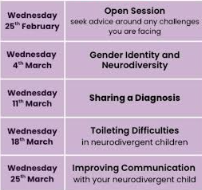
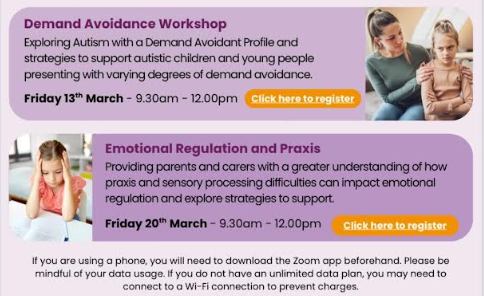
ADDvanced Solutions Spring Webinars - Final Few Sessions
Warrington Parents and Carers
Warrington Parents & Carers Forum is a voluntary group of enthusiastic, dedicated and experienced parents, carers, grandparents and family members of children and young people aged of 0-25 years with disabilities and additional needs.
Their main objective is to listen to families and young people in Warrington to find out what is really important to them. By finding out what is really important to families and the support they need, the Forum can see what is working well and what needs improving and we can then work with the organisations that plan and provide services in Warrington to make the best use of the resources available to improve your lives.
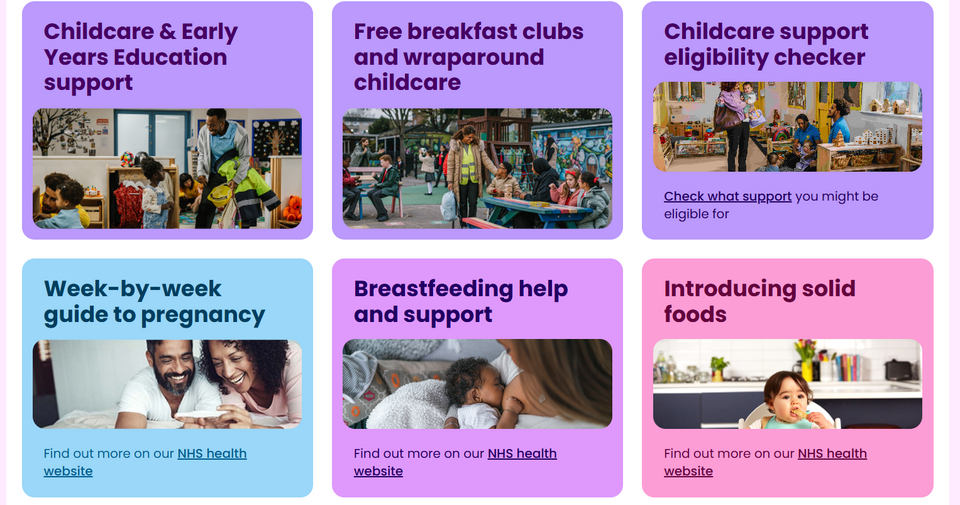
Nationally the Best Start in Life support page is a one-stop parent hub for support in all areas of child development and a place where you can sign up for for personalised emails, weekly newsletters or find support for parents during pregnancy, for babies, toddlers and in childcare and early years education through to school readiness.
The Special Education Needs and Disability Code of Practice 0-25 Years
National guidelines state that all schools must adhere to the ‘Special Educational Needs and Disability Code of Practice 0-25 Years’ (2015) when deciding how best to support children with SEND. The Code of Practice supports schools and parents in the process of identifying and catering for SEND children and young people from birth to 25 years of age.
The Code identifies four primary areas of SEND:
1 Communication and interaction
2 Cognition and learning
3 Social, emotional and mental health issues
4 Sensory and/or physical needs
At Grappenhall Heys, there is a step-by-step graduated model of action and intervention to support children with SEND. We ensure that all pupils in our school are treated with respect and have full access to a broad and balanced curriculum.
Click here to access Warrington Borough Council's Local Offer.
If you have any comments about our SEND offer, please contact Sarah Harman (SENDCo).
If you would like to make a complaint, please refer to our Complaints Policy.
Adaptation and Support at School
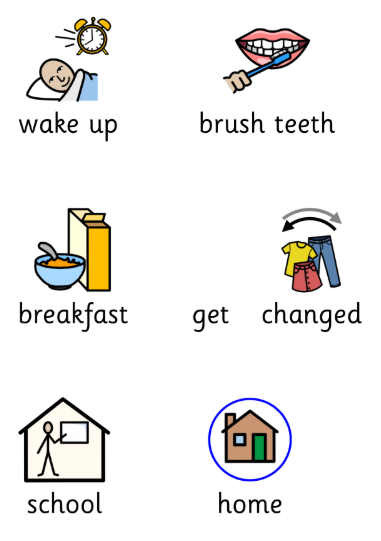
The visual timetable is recognised as an 'ordinarily available' resource; that is, a tool embedded within our universal teaching and learning provision, accessible to all pupils as part of everyday classroom practice. In addition, it forms part of the first stage of the Graduated Response, where it is used alongside Quality First Teaching to provide timely, proportionate support for pupils with SEND, as outlined in local authority SEND guidance.
Widget Timetable
This link is hyperlinked to provide access to a visual timetable which can be printed and used at home. Visual timetables can be a wonderfully supportive tool for many children, helping to provide clarity, predictability, and confidence in their daily routine.
One approach is for you, as parents and carers, to arrange the cards together with your child to help them understand and anticipate the order of their day. At weekends or during holidays, you might like to offer your child a selection of cards to choose from — for example, activities between mealtimes — so that they can experience a sense of ownership and agency over their day, within a supportive structure you have prepared.
This kind of supported choice-making can be particularly beneficial for children who find unexpected demands or transitions challenging, including those with Pathological Demand Avoidance (PDA) profiles, helping to reduce anxiety and build confidence.