


English as an Additional Language - EAL Support for Pupils and Families at GHCPS

At Grappenhall Heys Community Primary School, we are proud to welcome children and families from a rich diversity of linguistic and cultural backgrounds. Our school motto — Aim. Believe. Achieve. — belongs to every child, regardless of the language they speak at home. We believe that multilingualism is a strength, not a barrier, and that every child deserves the highest ambitions, the warmest welcome and the very best support to flourish. Guided by our school values of Care, Ambition, Respect and Excellence (WE CARE), we are committed to ensuring that pupils with English as an Additional Language (EAL) are fully included in every aspect of school life — academically, socially and emotionally — and that their potential is never limited by the stage of their English language development.
What is EAL?
A pupil is identified as having English as an Additional Language (EAL) if they are exposed to a language at home that is known or believed to be other than English. This is not a measure of English language proficiency, nor is it an indicator of academic ability. Many EAL pupils are highly capable, multilingual learners who bring remarkable cognitive flexibility and cultural richness to our school community.
England is home to an estimated 360 languages, and research consistently demonstrates that maintaining two or more languages offers significant advantages for later academic achievement. At GHCPS, we celebrate and value the home languages of all our pupils and families.
Our Commitment: Inclusion and Ambition for All
At GHCPS, our vision is clear: we aim for excellence in all that we do, we believe in excellence for ourselves and each other, and we achieve excellence in our own special way. This vision applies unconditionally to every learner. Ofsted recognised in February 2025 that:
"Pupils learn about different cultures and religions through a rich and diverse... curriculum. They understand that people can be different in a variety of ways but firmly believe that everyone should be treated equally... The strong provision for their wider personal development means that pupils leave school as well-rounded young people."
Ofsted, February 2025
Our EAL provision is grounded in this ethos. We hold high expectations for every EAL learner and provide targeted, evidence-informed support that enables each child to access a broad, ambitious curriculum and to make excellent progress.
How We Support EAL Pupils and Families
On Arrival: A Warm and Structured Welcome
- A welcome meeting with the class teacher and inclusion lead to gather information about the child's home languages, educational background and prior learning
- A home language profile to understand all languages spoken within the family
- Visual timetables, labelled environments and picture resources to support early orientation
- Translated key documents and communication wherever possible, with access to interpreter support
- A designated adult providing consistent support during the settling-in period
Classroom Provision: Quality First Teaching for EAL Learners
- Using clear, concise language: face-to-face communication, shortened sentences, stress on key vocabulary and explicit modelling
- 'Say less and stress, go slow and show' — a research-backed approach recommended by DfE guidance for early years and applied across all key stages
- Visual supports: picture cards, dual-language labels, story props and sequenced photographs of routines
- Layered participation — children are supported to access activities through observation, non-verbal response and gradually increasing spoken contribution
- Commenting and labelling rather than questioning as the primary approach, particularly in early stages
- Regular revisiting and re-proposing of prior learning to consolidate vocabulary and build confidence
- Rich, real-life experiences and purposeful play that provide meaningful language in context
- Incorporation of home languages and cultures into lessons, texts, songs, stories and displays
Support for Families
- Providing regular communication in accessible, plain English and, where possible, in home languages
- Holding welcome meetings with translation support
- Encouraging parents to speak to their child in their home language at home — this strengthens cognitive development and supports English learning
- Sharing resources from the Warrington Local Authority EAL service and The Bell Foundation's parent guidance (available in 22+ languages)
- Inviting families to share their cultures, languages and stories with the school community
- Signposting to ESOL classes and community language support available locally through Warrington Borough Council
EAL Support in the Early Years Foundation Stage (EYFS)
In our Nursery and Reception classes, we follow a particularly attentive and nurturing approach to welcoming children with EAL, informed by DfE guidance for early years providers and the EYFS framework.
Communication and Language
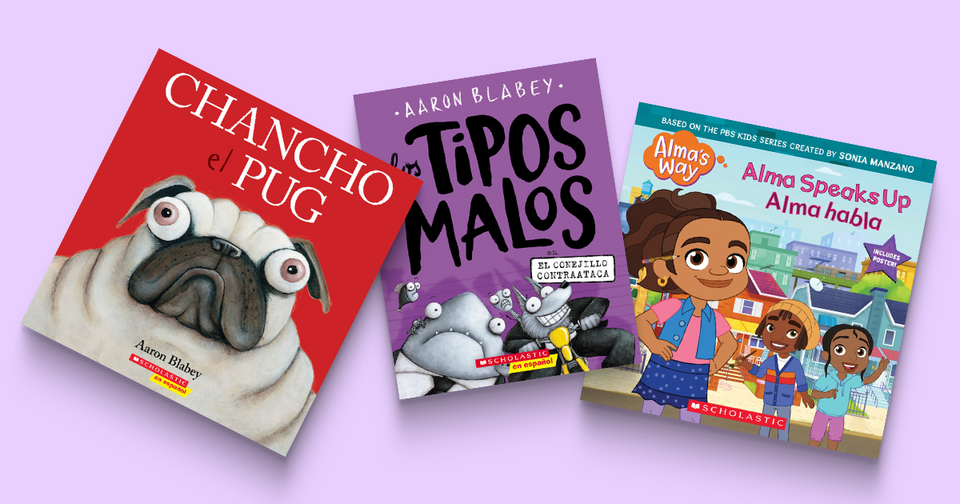
Developing spoken language is at the heart of our EYFS provision. For EAL learners, we:
- Provide rich, consistent language environments where English is modelled in meaningful, contextualised situations
- Use songs, rhymes, finger games and stories with actions and props — repeated frequently and with great enjoyment — to build familiarity and vocabulary
- Welcome home language use within the setting and recognise it as a firm foundation for English acquisition
- Keep provision consistent and predictable so children feel secure enough to explore language
Personal, Social and Emotional Development
We know that feeling secure is the precondition for learning. We create conditions where EAL children feel emotionally safe through key person relationships, visual communication tools such as emotions cards and photograph collections, and the celebration of every child's identity and background.
Cultural Capital and Diversity
Our EYFS environment reflects the diversity of our children. Books, resources, images, music and role play materials represent a range of cultures and languages. We make books with photographs of children and their families, invite community visitors and celebrate festivals and stories from different traditions — ensuring every child sees themselves valued in our school.
Assessment: Knowing Every EAL Learner
The Bell Foundation EAL Assessment Framework
We use The Bell Foundation's award-winning EAL Assessment Framework for Schools to assess and track the progress of our EAL pupils. This nationally recognised framework has been developed with leading experts in EAL assessment at King's College London and the University of Cambridge.
The framework enables our teachers to:
- Assess each pupil's English language proficiency across four strands: Listening, Speaking, Reading and Viewing, and Writing
- Identify specific needs and set individual targets for support
- Monitor progress over time and ensure no EAL learner is overlooked
- Inform lesson planning and in-class support strategies
The Bell Foundation's Assessment Tracker is used alongside the framework, providing a clear picture of each child's journey and enabling us to demonstrate progress to families. Crucially, the framework covers all EAL learners — not just those who are new to English — recognising that some pupils who appear fluent in conversational English may still require support with academic language and formal writing.
In our EYFS setting, we apply the primary descriptors from the Bell Foundation framework, using professional judgement to select the most relevant descriptors for our youngest learners.
WellComm
In our Early Years, we also use WellComm as a communication and language screening tool. WellComm can be administered in home languages with the support of a translator (including Cantonese), enabling us to build an accurate language profile for each child that distinguishes EAL from any underlying speech, language or communication need.
The Warrington Local Offer for EAL

Grappenhall Heys works in close partnership with the Warrington Borough Council EAL Advisory Service, which provides specialist support, training and resources to schools across the borough. The EAL team includes specialist advisory teachers who offer consultations, in-school support and professional development to help us continuously strengthen our provision.
Warrington EAL Advisory Service Email: EAL@warrington.gov.uk Tel: 01925 442343 EAL Lead Advisory Teacher: Wioletta Nowicka Further information: www.warrington.gov.uk/english-additional-language |
Warrington's local offer also provides guidance and signposting for EAL families, including:
- Information about the UK school system in accessible formats
- Details of ESOL classes for parents at Warrington & Vale Royal College and other local providers
- Advice for parents on supporting learning at home in any language
- Guidance on how families can engage with school life and decision-making
Useful Links and Further Information
DfE Guidance — English as an Additional Language (EYFS): help-for-early-years-providers.education.gov.uk
The Bell Foundation — EAL Assessment Framework: www.bell-foundation.org.uk/resources/eal-assessment-framework
The Bell Foundation — Parent Guidance (22+ languages): www.bell-foundation.org.uk
Warrington Borough Council — EAL Support for Families: www.warrington.gov.uk/english-additional-language
GHCPS — Inclusion, Equality and Wellbeing: www.grappenhallheys.co.uk/our_school/inclusion-_equality_and_wellbeing
GHCPS — EYFS Curriculum: www.grappenhallheys.co.uk/our_curriculum/eyfs
Contact Us
If you have any questions about EAL support at Grappenhall Heys, or if you would like to discuss your child's needs, please do not hesitate to contact us.
Tel: 01925 212540|www.grappenhallheys.co.uk